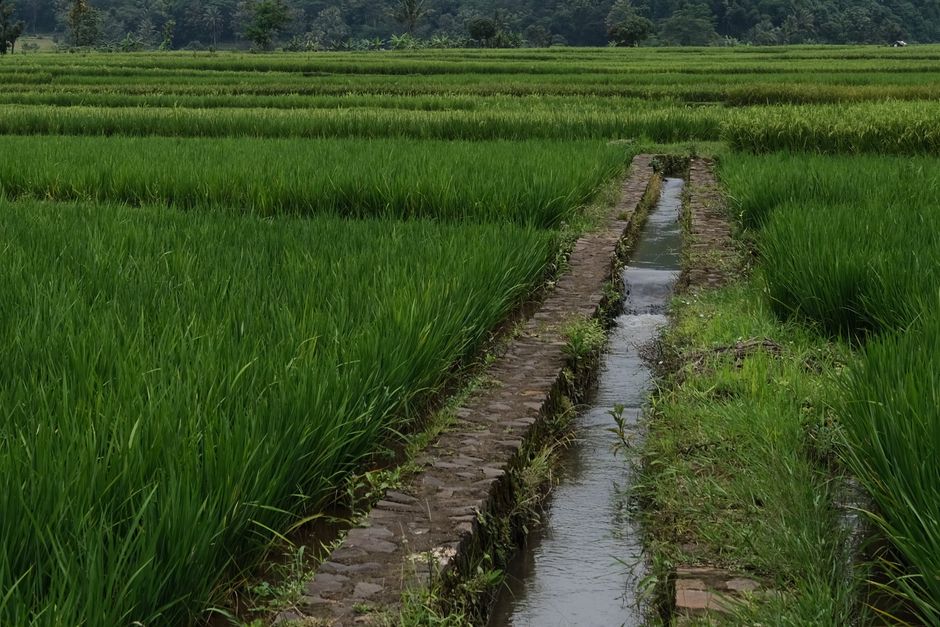
A team of researchers at the Indian Institute of Technology (IIT) Madras has unveiled a promising approach aimed at drastically reducing the amount of water required to cultivate rice, India's most widely grown and consumed staple food. The initiative was highlighted by IIT Madras Director Prof. V. Kamakoti, who pointed out that rice farming in India currently consumes an unsustainable volume of freshwater resources, raising serious concerns about long-term agricultural viability as water tables continue to fall across large parts of the country.
India accounts for roughly a fifth of the world's rice production, and the vast majority of this output relies on flooded field conditions that demand enormous quantities of irrigation water. In many rice-growing regions, especially in states such as Punjab, Haryana, and parts of Tamil Nadu, groundwater levels have been declining steadily over recent decades due to intensive paddy cultivation. Experts have warned that at current extraction rates, several key agricultural zones could face severe water shortages within the next few decades.
The IIT Madras effort appears to focus on modifying either the cultivation practices or the plant's physiological requirements so that rice can sustain healthy yields with substantially less water. While the precise technical details were not fully elaborated in the initial remarks by the institute's leadership, such research typically involves identifying or developing rice varieties that are more drought-tolerant, adjusting irrigation schedules, or employing targeted genetic and biochemical interventions that improve water-use efficiency in the crop.
If the approach proves effective at scale, it could have sweeping implications for millions of farmers who depend on rice cultivation for their livelihoods. Reducing water consumption per hectare without compromising grain output would allow growers to maintain productivity even as climate patterns become increasingly unpredictable and freshwater supplies grow tighter. Agricultural scientists and policymakers have long called for scalable solutions to the rice-water dilemma, making any credible breakthrough a matter of national interest.
The institute is expected to share further information about field trials, timelines for farmer adoption, and potential partnerships with agricultural departments as the research progresses.