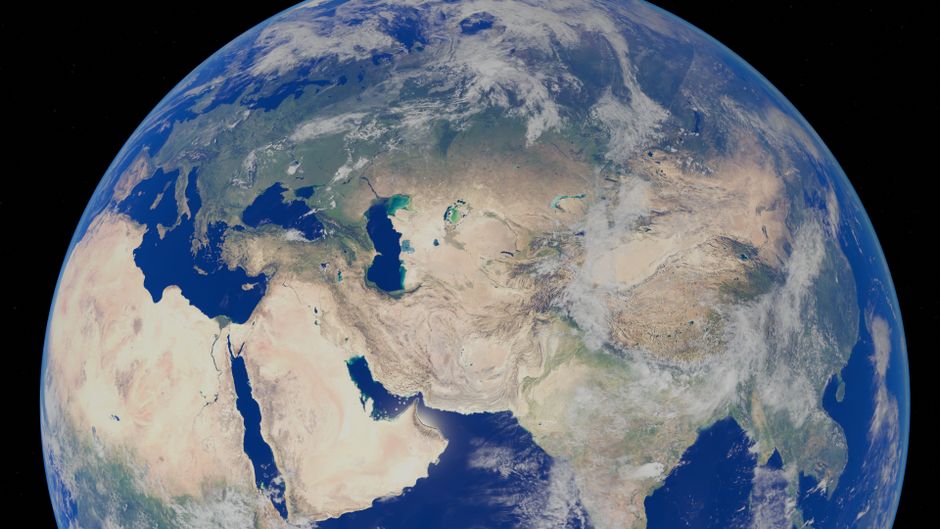
Climate monitoring agencies have confirmed that August 2026 has become the hottest month ever recorded on Earth, with global average temperatures running 1.65°C above the pre-industrial era baseline of 1850–1900. The finding underscores an accelerating pace of warming that now threatens to push the planet past critical thresholds outlined in the Paris Agreement.
The confirmation follows preliminary analysis released by major climate organizations including the Copernicus Climate Change Service (C3S) and the National Oceanic and Atmospheric Administration (NOAA), both of which independently cross-referenced satellite observations, ocean buoy networks, and land-based weather station data before finalizing their reports.
August's predecessor, July 2026, had already broken the all-time monthly temperature record by a significant margin, marking only the second time in history that two consecutive months each held the title of warmest ever recorded. The back-to-back records reflect a climate trajectory that scientists warn is outpacing most existing projections.
The 1.65°C figure is particularly significant because it approaches — and in some individual months already briefly exceeds — the 1.5°C guardrail established under the 2015 Paris Agreement as a ceiling to avoid the most catastrophic climate impacts. While the 1.5°C target applies to long-term annual averages rather than single-month spikes, the repeated breaching of this threshold during summer months signals that the window for stable climate conditions is narrowing rapidly.
Ocean temperatures played a decisive role in August's record. Sea surface temperatures across vast stretches of the Atlantic, Pacific, and Indian Oceans reached unprecedented levels, with large marine heatwave zones stretching from the Gulf of Mexico through the Caribbean and into the eastern Mediterranean. These thermal anomalies amplified atmospheric heating, suppressed storm formation patterns, and stressed coral reef ecosystems already reeling from years of bleaching events.
On land, extreme heat gripped South Asia, the Middle East, parts of southern Europe, and extensive regions of North America throughout the month. India, Pakistan, and Bangladesh reported prolonged heat waves with temperatures exceeding 48°C in several districts, triggering health emergencies and school closures. Southern Europe saw wildfire conditions worsen across Portugal, Spain, and Greece, while the southwestern United States experienced sustained desert heat lasting well beyond seasonal norms.
Scientists caution that one particularly hot month does not alone determine long-term climate trends, but the consistency of recent records — with eight of the ten warmest months on record occurring since mid-2023 — leaves little doubt about the direction of travel. Researchers note that natural variability, including the transition from La Niña to El Niño conditions, contributed additional warming pressure during August, compounding the underlying trend driven by greenhouse gas emissions.
World Meteorological Organization officials have called on governments to treat the August data as an urgent reinforcement of existing climate commitments, emphasizing that the cost of delayed action continues to grow in both human and economic terms.