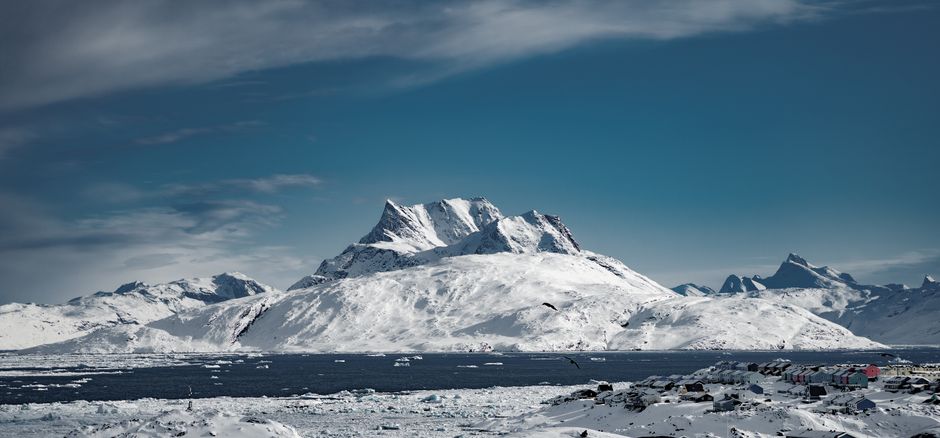
Washington — President Donald Trump took to his social media platform on Monday to announce what he described as a landmark agreement with Denmark to expand and permanently anchor U.S. military capabilities in Greenland, a sprawling autonomous territory within the Kingdom of Denmark located between the Arctic and Atlantic Oceans.
In a lengthy post, Trump wrote that the newly secured arrangement "gives the United States permanent control over security, and all other needs, in Greenland, completely addressing ALL of our many US concerns." He suggested the deal was the culmination of prolonged negotiations and framed it as a pivotal moment for American national security in the rapidly changing Arctic region.
The claim, if accurate, would represent one of the most significant shifts in U.S. military posture in the High North since World War II. Greenland hosts Thule Air Base, which the United States has operated since 1951 under a defense treaty with Denmark. The base serves as a critical component of America's space and missile warning systems. However, Trump's assertion that the new agreement grants the U.S. permanent and sweeping authority over security across the entire island marks a notable escalation beyond the existing framework.
Denmark has not yet publicly confirmed the details of any such agreement. Sources familiar with transatlantic defense talks indicated that while Washington and Copenhagen have held informal conversations about deepening cooperation in the Arctic, no formal deal matching Trump's description has been finalized or shared with Danish officials.
Greenland, home to roughly 56,000 residents, has increasingly drawn global attention as rising geopolitical competition in the Arctic intensifies. Both China and Russia have expanded their presence and influence in the region, prompting analysts to note that the United States has long sought to counterbalance foreign encroachment near its northern approaches.
Legal experts pointed out that any permanent expansion of U.S. military authority in Greenland would require ratification by both the Danish parliament and Greenland's own自治政府, known as the Naalakkersuisut. Danish constitutional law also places strict limits on territorial or sovereignty arrangements involving Greenland without explicit parliamentary consent.
The announcement immediately sparked reactions across European capitals and among NATO allies. Some defense analysts cautioned that premature declarations could complicate diplomatic relations with Copenhagen, while others viewed Trump's statement as a strategic signaling move aimed at reinforcing American commitments to Arctic security ahead of upcoming alliance discussions.
As of now, the White House has not released the text of the agreement or provided a timeline for implementation. The Pentagon also declined to comment on the specifics, directing inquiries to diplomatic channels. Meanwhile, Greenland's leadership has remained publicly silent on the matter, with government spokespersons declining to confirm or deny the president's claims.
The broader context of the announcement mirrors Trump's earlier stated interest in acquiring or leasing Greenland during his first term, an idea that was firmly rejected at the time by Danish Prime Minister Mette Frederiksen and Greenlandic officials alike. If the current proposal involves revised terms acceptable to Denmark and Nuuk, it could signal a shift in Washington's long-stated ambition to secure a more durable military foothold in the circumpolar North.