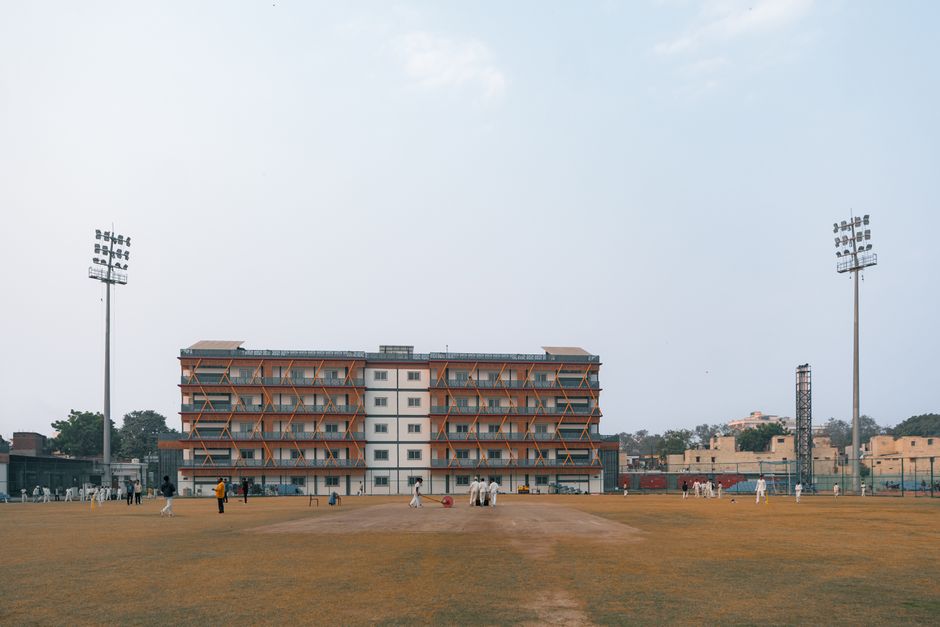
A pair of state-of-the-art sports grounds, claimed to be the highest twin fields in the world, were officially unveiled in Leh, the capital of Ladakh, raising hopes among athletes and residents alike that the high-altitude region will now have world-class facilities to nurture sporting talent.
The twin fields, located at an elevation of approximately 10,600 feet above sea level, are designed to serve multiple sports — primarily football and cricket — which enjoy immense popularity across Ladakh. The project has been undertaken as part of broader efforts by the Union Territory administration to modernize infrastructure and promote sports among the youth in one of India's most geographically challenging landscapes.
Laying the foundation for such an ambitious project at extreme altitudes involved overcoming significant logistical hurdles. Construction materials had to be transported over treacherous mountain passes, many of which remain closed during harsh winter months. Engineers and workers also had to contend with thin air, sub-zero temperatures, and fragile terrain. Despite these challenges, the grounds were completed with synthetic turf surfaces and basic amenities including floodlights, seating arrangements, and changing rooms.
Local administrators said the facility would especially benefit young athletes who previously had to travel long distances to cities like Jammu or Delhi to train on proper pitches. The high-altitude environment itself is considered advantageous for endurance sports, as training at such elevations improves red blood cell count and cardiovascular capacity — a principle already used by elite athletes worldwide.
The unveiling ceremony was attended by local officials, sports enthusiasts, and community leaders. Several young athletes from the region spoke about how the new grounds would transform their opportunities. Many also highlighted the symbolic importance of investing in sports infrastructure in a border area, where development projects serve as a reminder of the government's commitment to the region's progress.
Environmental considerations were also taken into account during planning. Officials stated that eco-friendly construction practices were followed, and the site was chosen to minimize disruption to the surrounding arid landscape. Water conservation systems and solar-powered lighting are reportedly part of the design.
The two fields join a growing list of sports infrastructure projects in Ladakh, which in recent years has seen the development of indoor skating rinks, archery ranges, and other athletic facilities aimed at positioning the union territory as a hub for winter and summer sports alike.