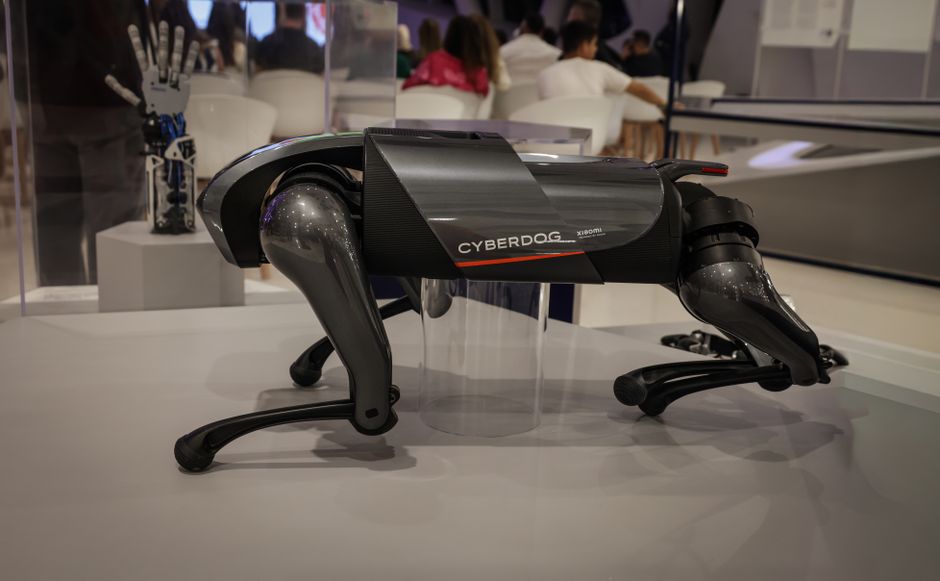
Ukraine is quietly revolutionizing its approach to the war with Russia by deploying specialized unmanned ground vehicles (UGVs) dubbed "Hyenas"—four-legged robotic drones designed to sneak behind enemy lines and detonate explosives among Russian positions.
The operation centers on a heavily guarded workshop located near the active front line, where a mechanic known only by his callsign Chimera plays a central role in preparing these machines for deployment. According to those familiar with the program, Chimera is responsible for the maintenance, testing, and readiness checks of the Hyena robots before they are sent into contested territory.
The Hyenas themselves are quadrupedal machines capable of navigating rough, unpredictable terrain that would challenge wheeled or tracked vehicles. Their four-legged design allows them to traverse rubble-strewn streets, cratered fields, and forested areas with relative agility. Once positioned within or near Russian defensive positions, the robots can be triggered to explode—either remotely or on a pre-set timer—delivering ordnance directly into enemy territory without risking a soldier's life.
Military analysts say the deployment of these robotic systems represents a meaningful shift in how Ukraine conducts asymmetric warfare. Rather than relying solely on traditional artillery barrages or human-led raiding parties, Kyiv is increasingly turning to unmanned systems that can operate in high-risk environments with minimal personnel exposure.
The use of UGVs has grown steadily throughout the conflict, with both sides investing in drone technology for reconnaissance, logistics, and strike missions. However, the Hyena program appears to represent one of the more advanced applications yet, combining mobility, stealth, and explosive delivery in a single platform.
Ukrainian officials have been deliberately secretive about the specifics of the program, including production numbers, exact deployment locations, and operational success rates. Security around the workshop and the identities of key personnel like Chimera suggest the technology and tactics are considered sensitive assets that Russia would seek to disrupt or capture.
Defense experts note that such robotic systems are likely to become a permanent feature of modern warfare, influencing how military doctrines evolve in the years ahead. The Hyena project, though shrouded in secrecy, could signal a broader trend toward autonomous and semi-autonomous weapons platforms on the battlefield.