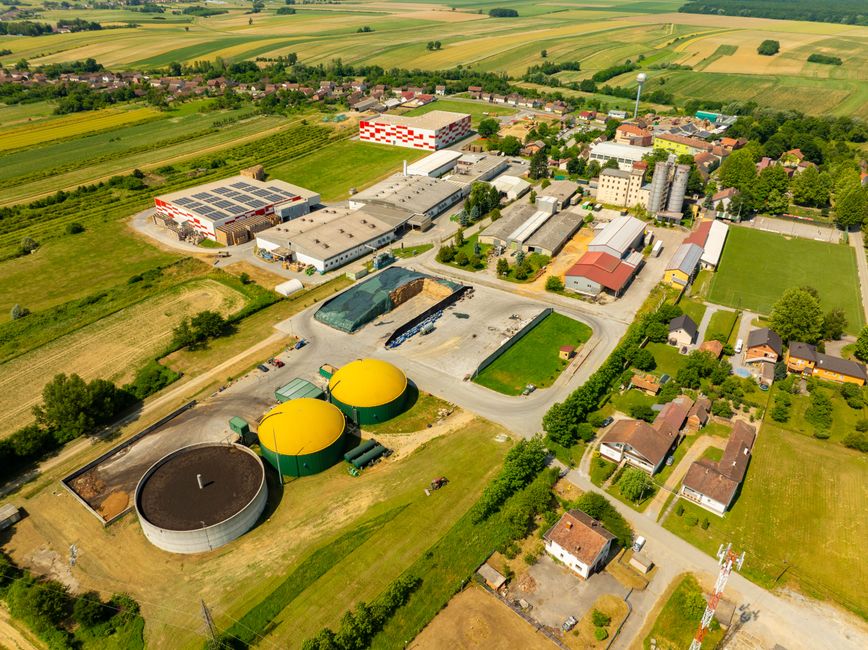
A recycling and waste-processing facility in Gloucestershire, England, has emerged as a notable example of how everyday organic waste can be transformed into valuable renewable energy. The Rose Hill Recycling site, located near Dymock, began operations in earnest in the years leading up to 2017, when it was processing approximately 35,000 tonnes of food and farm waste every year.
The facility relies on a process called anaerobic digestion — a natural breakdown of organic material by microorganisms in the absence of oxygen. During this process, biogas, primarily composed of methane and carbon dioxide, is released. Rather than releasing that methane into the atmosphere, where it would act as a potent greenhouse gas, the facility captures it and puts it to productive use.
The captured biogas is fed into a combined heat and power (CHP) system. A CHP unit simultaneously generates electricity and usable thermal energy from the same fuel source, making the overall process significantly more efficient than conventional power generation. In 2017, the Rose Hill facility produced around 4.56 gigawatt-hours of electricity — enough to supply the annual needs of approximately 1,400 typical British homes.
The plant accepts a range of organic inputs, including agricultural residues, food scraps, and other biodegradable materials that might otherwise end up in landfills. When organic waste decomposes in a landfill without oxygen, it releases methane directly into the atmosphere. Diverting that waste to an anaerobic digestion facility prevents those emissions and creates a circular economy loop: waste becomes energy, and the leftover digestate can be used as a nutrient-rich fertilizer.
The United Kingdom has increasingly emphasized waste-to-energy projects as part of its broader strategy to reduce reliance on fossil fuels and meet climate targets. Anaerobic digestion is considered one of the more mature and scalable technologies in the renewable energy space, and facilities like the one at Rose Hill Recycling demonstrate its practical application at a regional scale.
Environmental experts have pointed out that such projects show how routine waste streams — often treated as an inconvenience or a cost burden — can be reimagined as resource opportunities. The model has attracted attention from other UK regions and European countries looking for ways to manage rising organic waste while generating clean power.