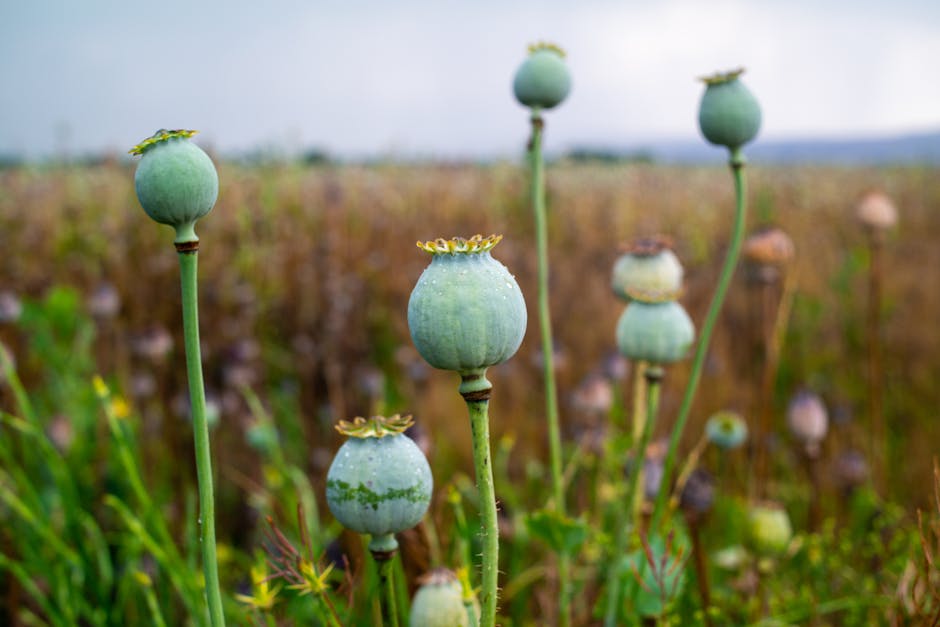
Former US President Donald Trump has publicly acknowledged India's efforts to curb illegal poppy cultivation, framing it as a critical component in the broader global fight against drug trafficking. In remarks that also touched upon international drug control policy, Trump identified 23 nations as major transit hubs for narcotics moving across borders, and directed a pointed appeal at China to strengthen its controls on the precursor chemicals that fuel the manufacturing of fentanyl, methamphetamine, and other synthetic substances.
India, which maintains a tightly regulated legal opium farming system under the Opium Act of 1857, has in recent years stepped up actions against unauthorized poppy cultivation in several states. Illegal farming has been reported in parts of Madhya Pradesh, Rajasthan, and Uttar Pradesh, often linked to organized crime syndicates that divert raw material into underground heroin and opioid markets. Trump's comments were seen as validation of New Delhi's Enforcement Directorate and Narcotics Control Bureau operations that have seized thousands of kilograms of opium paste and arrested traffickers over the past few years.
The list of 23 drug transit nations Trump referenced aligns broadly with categories outlined in the US State Department's annual International Narcotics Control Strategy Report. Those reports have historically flagged countries along key trafficking corridors — including those in Central Asia, Southeast Asia, Latin America, and parts of Africa — as waypoints through which heroin, synthetic opioids, and other illicit drugs move toward consumer markets in North America and Europe.
A central thread in Trump's statement was a renewed push on China, which US officials have long accused of allowing the export of chemical precursors essential to fentanyl and meth production. Despite China scheduling several fentanyl-related compounds as controlled substances in 2019, American law enforcement agencies have continued to report that clandestine laboratories in Southeast Asia, particularly in Myanmar and Laos, source precursor materials routed through Chinese supply chains. Trump reiterated that without stricter enforcement at the chemical-export level, downstream drug flows would remain difficult to stem.
The comments come at a time when the United States continues to grapple with a devastating opioid crisis that has claimed hundreds of thousands of lives since the 1990s, with fentanyl now responsible for the largest share of overdose deaths. India's balancing act — supplying legal opium for global pharmaceutical needs while suppressing illicit cultivation — has drawn increasing attention from Washington as part of wider Indo-US cooperation on narcotics control.


