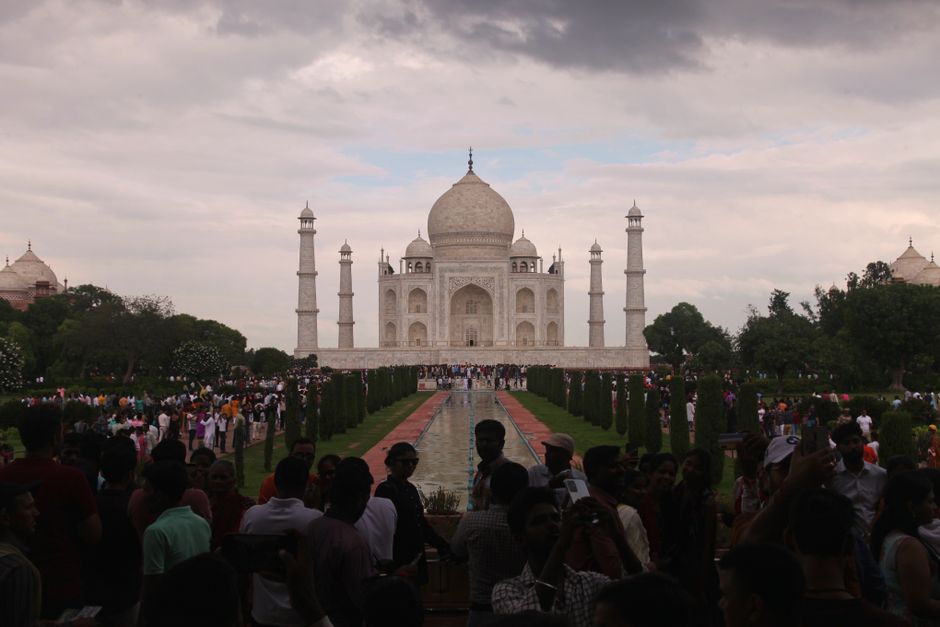
Agra's majestic Taj Mahal, one of the Seven Wonders of the World, stood resplendent in hues of saffron, white, and green as the historic monument became the centrepiece of celebrations marking India's 80th Independence Day on August 15, 2026. For the first time in its long history, the white marble mausoleum was illuminated with a specially designed tricolour light show that transformed its silhouette against the evening sky, drawing thousands of visitors and onlookers to the banks of the Yamuna River.
The Archaeological Survey of India (ASI), which oversees the monument, coordinated with local authorities and the Uttar Pradesh tourism department to organise a series of events spanning the entire day. Flag-hoisting ceremonies were held at multiple points within the Taj complex and surrounding areas, including Mehtab Bagh, the garden plaza directly opposite the main structure across the river. Cultural programmes featuring classical dance, folk music, and recitations of patriotic verses were staged throughout the afternoon, blending the site's Mughal-era heritage with contemporary expressions of national pride.
Tourist footfall reportedly surged to nearly record levels, with domestic visitors making up the overwhelming majority of the crowd. Hotel occupancy rates in Agra climbed above 90 per cent over the long weekend, and local businesses — from shopkeepers selling miniature replicas and handicrafts to guides and transport operators — reported their busiest Independence Day in years. Several schools and colleges from across Uttar Pradesh and neighbouring states had organised educational trips to the monument, where students participated in special lectures on India's freedom struggle and the significance of preserving archaeological heritage.
The Uttar Pradesh government's tourism chief emphasised that the celebrations were also intended to spotlight the ongoing restoration and conservation work being undertaken at the Taj Mahal and adjacent heritage sites in the Agra region. In recent years, efforts have focused on reducing pollution damage to the marble façade, managing crowd dynamics, and improving the visitor experience while maintaining the monument's sanctity. Officials stated that the 80th anniversary was an opportunity to reaffirm commitment to these long-term preservation goals.
Notably, the ASI also used the occasion to launch a renewed public awareness campaign urging visitors to respect the site's rules — no littering, no vandalism, and strict adherence to the no-plastic policy enforced within the monument's perimeter. Heritage conservationists welcomed the timing of the campaign, noting that mass tourism, while economically vital, poses persistent challenges to the structural integrity of the 17th-century tomb commissioned by Mughal emperor Shah Jahan in memory of his wife Mumtaz Mahal.
As night fell, the tricolour illumination reached its peak, with projections mapping the outlines of India's struggle for independence onto the curved domes and minarets of the Taj. For millions watching live broadcasts and social media feeds, the sight reinforced the enduring bond between the nation's greatest architectural treasure and the identity of a free India.


