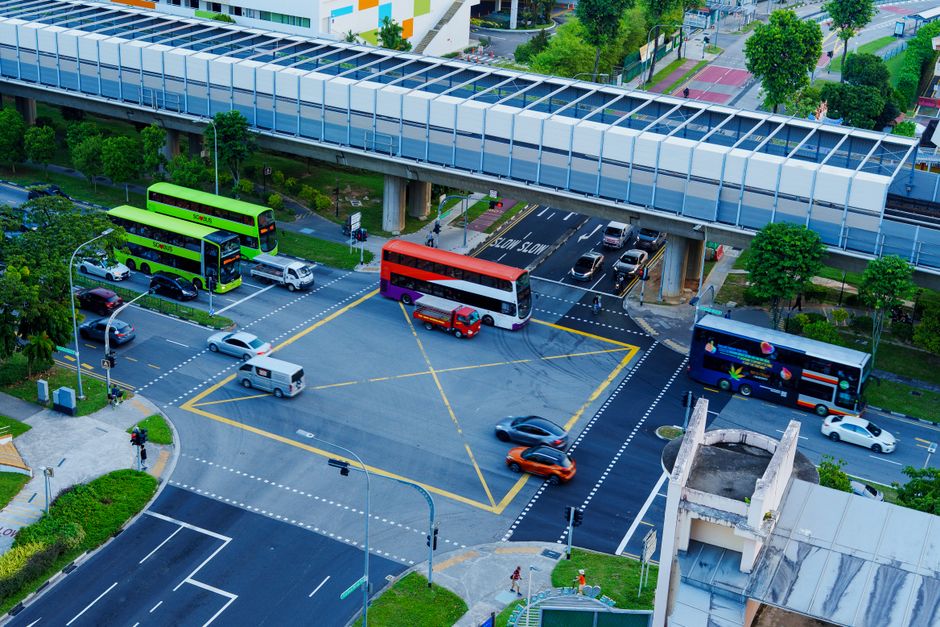
The Supreme Court on Tuesday issued strong directives to the Union government and all state and union territory administrations to strictly enforce the long-pending mandate requiring speed limiting devices or speed limiting functions in every public transport vehicle across the country.
The court's intervention comes more than a decade after the government first directed the installation of such devices, yet implementation has been patchy at best. Observers and petitioners before the court have pointed out that despite repeated orders, too few public buses and other passenger-carrying vehicles are actually fitted with functional speed limiters, leaving roads dangerously unsafe, especially on highways and inter-state routes.
Speed limiting devices, also referred to as speed governors, are mechanical or electronic systems that prevent vehicles from exceeding a predetermined maximum speed. For heavy commercial and public transport vehicles, the mandated ceiling has typically been set at 65 kilometres per hour, a figure intended to reduce the severity of crashes caused by overspeeding. Studies by road safety organisations have consistently shown that a large share of fatal accidents involving buses and trucks is linked to excessive speed, particularly on expressways and national highways where vehicles regularly travel well above safe limits.
In its order, the Supreme Court expressed clear frustration at the gap between policy and practice. The court noted that while the regulatory framework existed on paper, actual compliance on the ground fell far short of what was required. Petitioners had argued that the lack of enforcement amounted to a denial of the fundamental right to life and safety for commuters who rely on public transport daily.
The judges directed the central government and state authorities to take concrete steps to ensure that every public transport vehicle operating within their jurisdiction is equipped with a working speed limiter. The court also asked the governments to submit compliance status reports, signalling that it will continue to monitor progress closely. Legal experts say the order carries the weight of a binding direction and non-compliance could attract further judicial action.
Road safety advocates have welcomed the ruling but cautioned that hardware alone is not enough. They stress that regular inspections, strict penalties for tampering with speed limiters, and awareness campaigns among transport operators are equally important to make the rule effective in practice. The Supreme Court's latest order is now expected to trigger renewed efforts across states to operationalise the decade-old mandate.