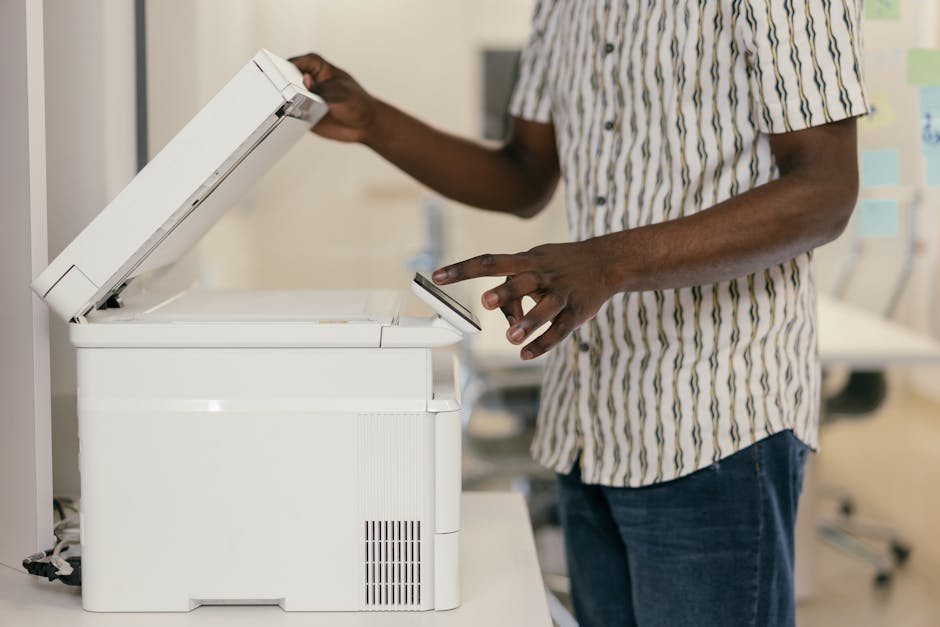
The Ricoh SP-2240N document scanner has drawn strong attention in recent reviews for its ability to handle demanding workloads in small-office environments that depend primarily on wired network connectivity. Built around an Ethernet-only connection, the device is designed for teams that want stable, fast file transfers without the variability that sometimes comes with wireless setups.
One of the scanner’s most notable specifications is its peak daily duty cycle rating, which places it among the higher-end offerings in its class. This means the machine can comfortably manage large volumes of scans throughout a typical business day without overheating or slowing down significantly — a practical advantage for offices that routinely process stacks of invoices, contracts, and client documents.
For small businesses and remote workspaces that have moved away from printing hubs and now focus more on digitizing paperwork, the SP-2240N offers a straightforward plug-and-network workflow. Documents are fed through the automatic document feeder, scanned at solid speeds, and routed directly to shared drives or cloud storage via the local network. The absence of Wi-Fi hardware keeps the unit simpler and often more affordable, while still delivering reliable performance for organizations that already have structured cabling in place.
Reviewers have highlighted the scanner’s robust build quality and the clarity of its output, noting that text-heavy materials — such as printed forms and spreadsheets — reproduce with sharp, readable detail. The device also includes standard features like duplex scanning, which flips pages automatically to capture both sides in a single pass, and basic image-processing tools that reduce noise and correct alignment without requiring additional software installations.
While it does not target enterprise-level markets with advanced security encryption or mobile app ecosystems, the SP-2240N fills a clear niche for cost-conscious teams that prioritize consistency, speed, and network reliability over peripheral extras.