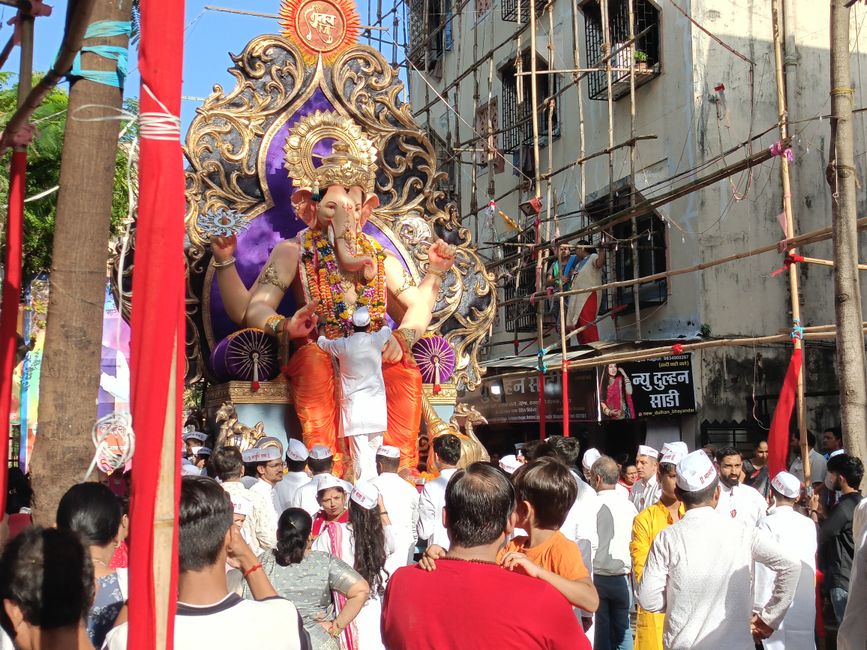
Mumbai witnessed the beginning of Ganesh Visarjan on Tuesday evening as devotees across the city submerged thousands of Lord Ganesha idols in local water bodies. By 6 pm, municipal officials reported that more than 2,850 idols had been immersed during the second day of the ritual — marking the start of a major annual tradition that draws millions of participants across the city.
The Ganeshotsav, which spans twelve days, sees idols installed in homes, community pandals, and public spaces throughout Mumbai. Devotees celebrate with prayers, music, and food distributions before the grand finale. However, the actual immersion does not begin all at once. Different communities follow different timelines — some immerse their idols after just one and a half days of worship, while others observe the traditional five-day consecration period before performing the visarjan ceremony.
This year, the festival commenced after the new moon in the Hindu calendar month of Bhadrapada and will conclude on Anant Chaturdashi, falling on September 25. On that final day, massive processions wind through Mumbai's streets, carrying elaborately decorated idols to designated immersion points along the coastline and in artificial ponds.
Mumbai's civic authorities have been proactive in managing the event. The Brihanmumbai Municipal Corporation has designated specific immersion tanks and coastal zones to prevent damage to the city's natural waterways. Environmental agencies have also urged devotees to switch to clay idols painted with natural, non-toxic colors, discouraging the use of Plaster of Paris and chemical paints that harm aquatic life. In recent years, several community groups have organized eco-conscious visarjan events, sometimes immersing idols in custom-built tubs at home before transporting the softened clay to rivers or the sea.
Festival organizers estimate that over 150,000 idols are immersed in Mumbai each year, making it one of the largest single-site religious gatherings in the world. The economic impact is significant, with local artisans, flower vendors, and food sellers seeing a sharp spike in revenue during the festival period.


