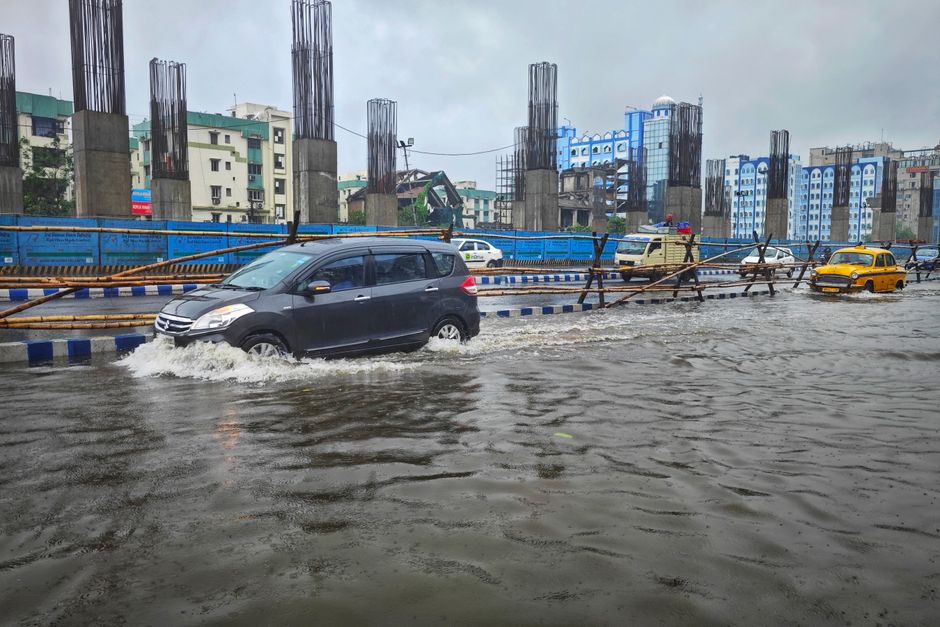
Severe monsoon downpours lashed the Mumbai metropolitan region overnight, sending streets under water and bringing daily life to a grinding halt in several localities. The heaviest rainfall was reported in Mumbai and the adjoining Vasai-Virar area, where continuous rain through the night left large stretches of the city underwater by early morning.
Waterlogging was particularly severe in Sainik Nagar's Pratikshya Nagar area, where rising water levels forced residents to wade through knee-deep runoff to move around their neighbourhood. The situation near Chhatrapati Shivaji Maharaj International Airport (CSMIA) also turned difficult, with water accumulating in low-lying roads surrounding the airport terminal, raising concerns about ground transportation delays and commuter hardship.
In Nalasopara, located in the northern suburbs, the impact was even more dramatic. Several major roads including those near Centre Park and the Tulind Bridge were completely submerged, isolating sections of the densely populated suburb. Residents reported that vehicles could not pass through certain stretches, and local volunteer groups worked through the night to assist stranded motorists and elderly residents.
Not far from Mumbai, in Himachal Pradesh's capital Shimla, nature delivered its own warning. A portion of forest land collapsed in the Fanchakande area after sustained rainfall weakened the soil structure. Dozens of deodar trees were uprooted or snapped during the landslide, though there have been no reports of human casualties from this incident so far. The Landslide Warning Division of the India Meteorological Department had issued alerts for several hilly regions of the state ahead of the storm.
The India Meteorological Department (IMD) has predicted continued rainfall across Himachal Pradesh until at least September 18, urging residents in vulnerable hill zones to remain cautious. The weather body warned that the saturation level of soil in many areas of the state has already reached critical levels, increasing the risk of further landslides and flash floods in riverine and mountainous regions.
Meanwhile, the flood crisis in Bihar continues to escalate. The state has seen some of the worst monsoon flooding in recent years, with rivers like the Kosi, Gandak, and Mahananda crossing danger marks after heavy rainfall in the Nepalese hills and upstream catchment areas. The latest official figures place the number of people affected by floods in Bihar at over 48 lakh — a figure that government officials warn could rise further as water levels in several districts have not yet peaked. Relief camps have been set up across multiple districts, and the state government has requested additional central assistance for rescue and rehabilitation operations.
Meteorologists say the current monsoon pattern across India remains highly erratic, with some regions drenched while others face water deficits — a trend experts link to broader climate variability.