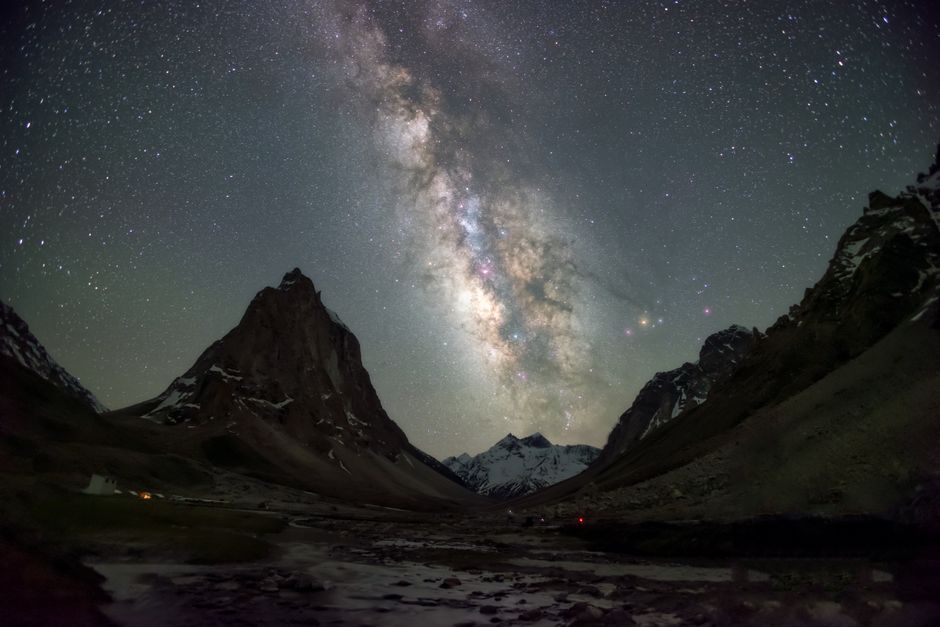
High in the Changthang plateau of Ladakh, where thin air and unpolluted skies make the Milky Way visible in breathtaking detail, a quiet transformation is underway. Women from surrounding villages are training to become astro-ambassadors at Hanle, home to India's first Dark Sky Reserve, established in partnership between the Physical Research Laboratory's Hanle Observatory and the local Ladakh Hill Council.
The initiative, which gained visibility in recent tourism and cultural promotions, pairs young local women with astronomy educators and tour operators to lead night-sky experiences for visitors. Instead of merely serving as guides or hospitality staff, these women are learning to explain constellations, planetary movements, and the scientific significance of dark-sky conservation — roles that blend traditional knowledge with modern astronomy.
Hanle, perched at roughly 4,500 metres above sea level, already hosts one of the world's highest optical telescopes. Its exceptionally clear atmosphere and minimal light pollution make it a natural destination for serious stargazers and tourists alike. But beyond its scientific credentials, the area is steeped in centuries-old nomadic traditions that included reading the night sky for navigation and seasonal change. The new ambassador programme seeks to bridge those two worlds — honoring ancient sky lore while equipping women with employable skills in a region where formal job opportunities have historically been scarce.
Participants in the programme report that the training has shifted not only their career prospects but also how they view their own community. For many, the idea of working in astronomy was alien; now they describe themselves as storytellers of the cosmos, translating complex ideas into warm, accessible narratives for visiting tourists.
Tourism officials note that the Dark Sky Reserve has seen rising visitor numbers, especially among international travellers seeking responsible, low-impact astro-tourism. The presence of trained local ambassadors adds authenticity to those experiences and ensures that economic benefits reach residents directly rather than flowing only to outside operators.
Critics and observers point out that while the programme is promising, its long-term sustainability depends on continued funding, infrastructure support at extreme altitude, and whether additional women from the region will be recruited in coming seasons. Nevertheless, it stands as one of the more distinctive examples of community-based, gender-inclusive tourism development in India's northernmost territories.


