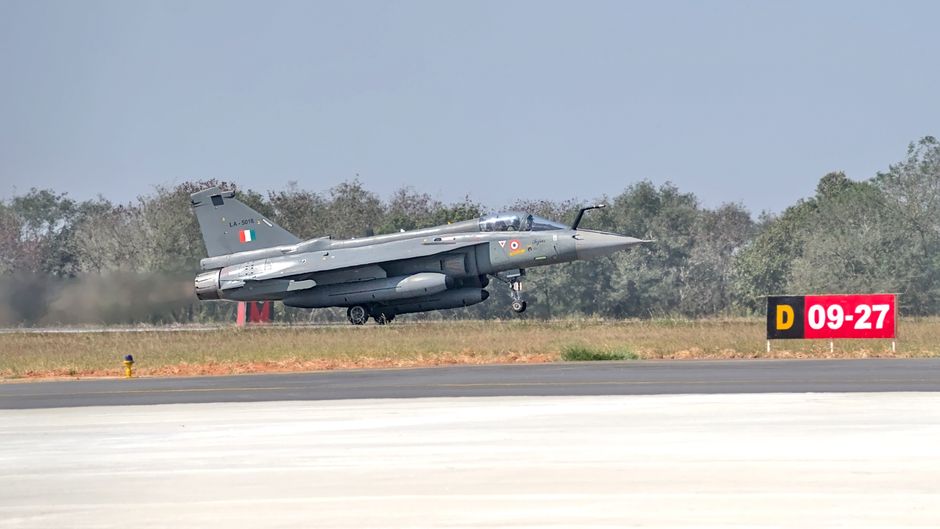
India's indigenously built Tejas Mk1A fighter jet programme has reached a significant milestone, with manufacturer Hindustan Aeronautics Limited (HAL) confirming that 27 airframes have been fully produced and are awaiting delivery. The news marks a decisive step toward fulfilling a large contract worth over ₹36,000 crore that the Ministry of Defence signed with HAL earlier, making it one of the most substantial procurement orders for India's indigenous defence aerospace programme.
The Tejas Mk1A is an advanced variant of the Light Combat Aircraft developed by the Aeronautical Development Agency and manufactured at HAL's facilities in Bengaluru. It carries significant upgrades over the original Mk1 version, including a longer range, improved radar and avionics systems, the ability to carry a wider payload of precision-guided munitions, and enhanced electronic warfare capabilities. The Indian Air Force has long considered the Tejas Mk1A the backbone of its future fighter inventory, especially as existing Su-30MKI and MiG-29 squadrons age.
While 27 airframes are now complete, delivery will be staggered over the coming months. Defence analysts note that the pace of handover has historically been constrained by engine supply bottlenecks — the Tejas Mk1A relies on the General Electric F414 engine, which has faced global demand pressures. HAL and the Ministry of Defence have stated they are working closely with GE Aerospace to prioritise Indian allocations.
The Indian Air Force currently operates two fighter squadrons of the original Tejas Mk1, but the government has approved a total order for 83 Mk1A aircraft. With nearly a third of that total already off the production line, officials view the current rate as an acceleration of the programme that could see the IAF achieve operational deployment across multiple squadrons within the next two to three years.
Defence experts say the Tejas programme is also strategically vital beyond air combat capability. By completing aircraft domestically, India reduces its reliance on foreign suppliers and builds a self-reliant aerospace manufacturing ecosystem — a cornerstone of the Atmanirbhar Bharat initiative that has drawn strong political backing.