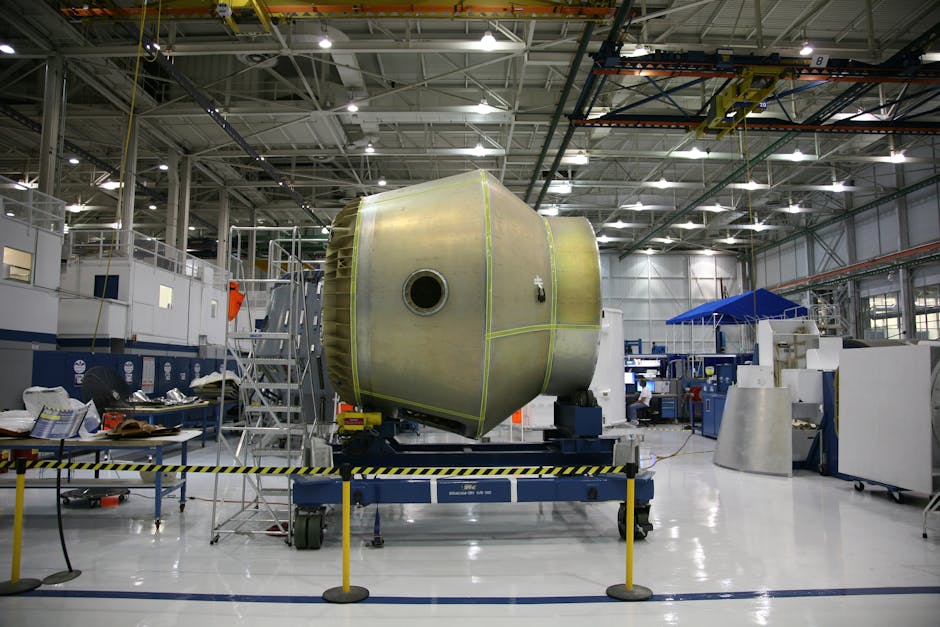
India's dream of manufacturing its own commercial aircraft moved a decisive step closer on Thursday as SFO Technologies Pvt. Ltd., the flagship aerospace and defence division of the NeST Group, formally handed over the first airworthy Primary Power Distribution System for the SARAS MK-II indigenous passenger aircraft.
The handover ceremony was held at the NeST Hi-Tek Park in Kalamassery near Kochi in Kerala, underscoring the growing importance of southern India as a hub for advanced aerospace manufacturing in the country.
The Primary Power Distribution System is one of the most critical subsystems in any aircraft, responsible for routing electrical power across various onboard systems — from navigation and communication equipment to environmental controls and flight instruments. Its successful manufacture and delivery signals that India's domestic supply chain for civil aviation components is beginning to mature beyond theoretical design stages into tangible, airworthy hardware.
The SARAS (Small Airborne Ranch For Airlines and Society) MK-II is a nine-to-twelve-seat regional turboprop aircraft designed and developed by SFO Technologies in collaboration with the National Aerospace Laboratories (NAL). The programme traces its roots back to the early 1990s when NAL initiated the project with the aim of building a simple, reliable, short-haul commuter aircraft suited to India's diverse operational environment — including short runways, high-altitude airstrips, and tropical weather conditions.
The MK-II variant represents a significant evolution over the original SARAS prototype, featuring an upgraded engine, enhanced cabin configuration, improved avionics, and compliance with updated airworthiness standards set by the Directorate General of Civil Aviation (DGCA). It is being designed primarily for regional connectivity missions, linking smaller towns and cities that currently lack adequate air service.
Industry observers note that the delivery of the power distribution system is not merely a component-level achievement but reflects growing capabilities in precision manufacturing, quality certification, and systems integration — all essential prerequisites for obtaining type certification from aviation regulators.
The SARAS programme has faced its share of delays over the years, with the first prototype making its maiden flight in 2017 and subsequent test flights spread over several years. However, each incremental milestone — from airframe assembly to engine integration to subsystem delivery — has brought the aircraft closer to its ultimate goal of entering commercial service.
Government encouragement through schemes such as the Production Linked Incentive (PLI) for the aerospace sector and the push for Atmanirbhar Bharat in defence and civil aviation have provided additional momentum to programmes like SARAS. Officials have repeatedly emphasised that indigenously developed aircraft would reduce India's dependence on imported regional aircraft and create a sustainable domestic aerospace ecosystem.
The SARAS MK-II's progress comes at a time when India is actively seeking to position itself as a global manufacturing destination in aerospace. While programmes like the TEjas fighter jet have garnered international attention, SARAS represents India's ambitions in the commercial civilian aviation space — a segment dominated by giants like Airbus and Boeing but with room for niche regional players.
Stakeholders involved in the project expressed optimism that the aircraft could achieve its certification targets within the coming years, potentially opening new routes under the government's UDAN regional connectivity scheme.