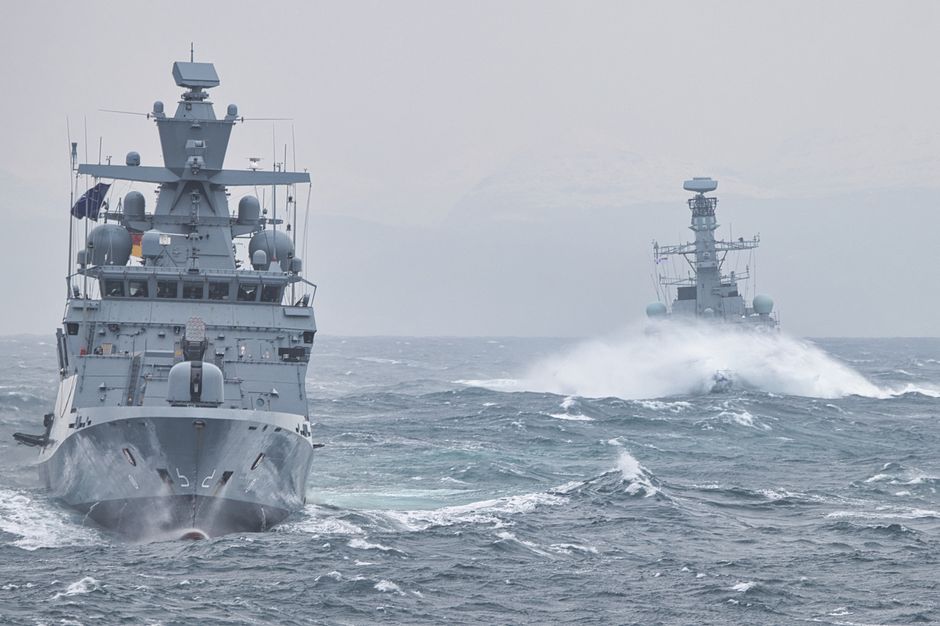
Tensions between India and Pakistan escalated sharply in the northern Arabian Sea after a Pakistani naval vessel collided with an Indian warship, an incident both sides have condemned while New Delhi has taken it to the diplomatic level. The Indian Navy stated that the Pakistani ship executed an unsafe manoeuvre that led to the collision, though Islamabad has not yet released its own version of events. The Ministry of External Affairs promptly summoned Pakistan's Chargé d'Affairs in New Delhi to register a formal protest, marking one of the most serious maritime confrontations between the two nations in recent years.
The collision has reignited concerns about what security analysts call “grey-zone” tactics—aggressive but sub-threshold military moves that fall below the level of open armed conflict yet steadily erode trust between adversaries. Naval officials from both countries have long relied on established confidence-building measures, including pre-deployment notifications and standardized communication protocols, to avoid exactly this kind of dangerous encounter at sea. India's statement that the Pakistani vessel breached these mutual understandings underscores how fragile these arrangements remain when political relations are already strained.
This is not the first time the two navies have found themselves in a dangerous encounter. In 2011, an Indian warship was also rammed by a Pakistani vessel in disputed waters off the coast of Gujarat, an incident that drew similar diplomatic protests and temporary suspension of bilateral maritime cooperation. The recurrence of such confrontations suggests a growing pattern of brinkmanship in waters where the two navies operate in close proximity, particularly near the Line of Actual Control at sea and around the disputed region of Kashmir.
Military observers note that both India and Pakistan have been expanding their naval capabilities in the Arabian Sea, driven in part by China's growing presence in the Indian Ocean region. The increased frequency of naval operations raises the probability of further incidents like this one. Defence experts warn that without stronger communication channels and stricter adherence to existing agreements, the risk of miscalculation could spiral beyond a simple collision into something far more dangerous.