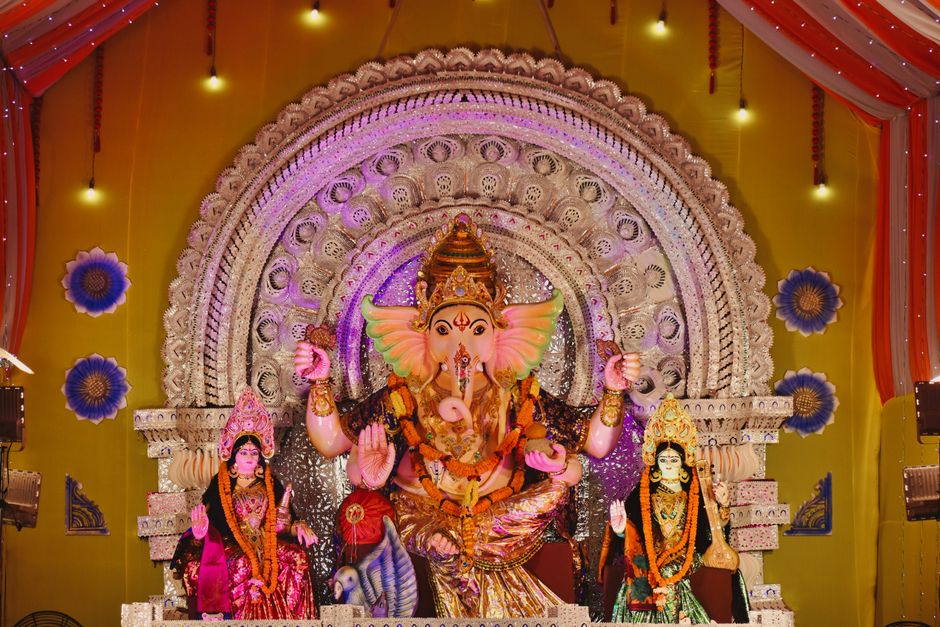
Ganesh Chaturthi, one of India's most widely celebrated Hindu festivals dedicated to Lord Ganesha, has officially begun across multiple cities, each bringing its own distinct character to the nine-day annual observance. Mumbai's legendary Lalbaugcha Raja — affectionately known as the "King of Lalbaug" — has taken center stage this year with a主题 that breaks from convention: the entire pandal and idol are themed around Lord Shiva (Mahadev). At the heart of the elaborate decoration sits a towering trident, or trishul, symbolizing Lord Shiva's divine power. This marks the 93rd consecutive Ganeshotsav for the Lalbaugcha Raja Mandal, making it one of the oldest and most revered Ganesh celebration committees in Maharashtra. Devotees who flocked to the Chowpatty area described seeing a striking visual contrast between the traditionally joyful green-and-gold Ganesha aesthetic and the solemn, ascetic Shiva imagery now surrounding the idol.
Meanwhile, in Madhya Pradesh's largest city, Indore, a massive 14-foot-tall Ganesha idol crafted from three tonnes of natural clay was installed at Tilak Nagar, drawing large crowds eager to witness the eco-conscious installation. The mandal organizing the event specifically designed the idol and surrounding pandal decorations to convey a strong message about nature conservation and animal welfare — reflecting a growing trend across India where communities are shifting away from chemical-laden plaster-of-Paris idols toward biodegradable alternatives that dissolve harmlessly in water.
In Rajasthan's capital, the historic Moti Doongri Ganesh Mandir has prepared special arrangements for two key occasions during the festival: Sinjara Mahotsav, a traditional pre-festival ritual unique to the region, and Janmotsav, or Ganesha's birth celebration. Thousands of devotees are expected to visit throughout the nine-day period.
Festival organizers across the country have emphasized environmental sustainability this year, with many mandals committing to use only natural, biodegradable materials for their installations in response to growing ecological concerns around water pollution caused by traditional idol immersion practices.


