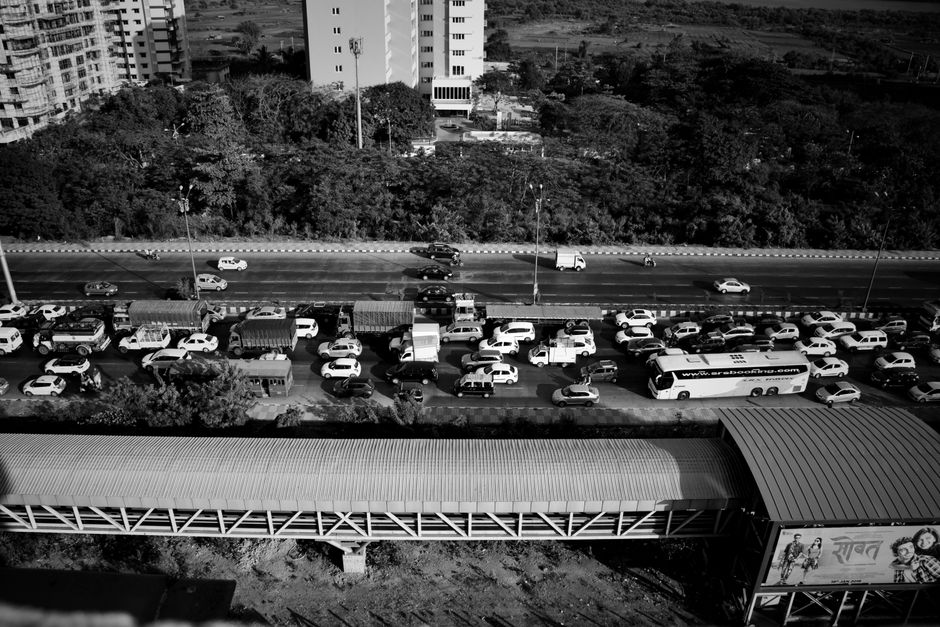
Union Minister for Road Transport and Highways Nitin Gadkari found himself stuck in a traffic jam that cost him a full hour of travel time in Mumbai over the weekend, and he did not hesitate to point the finger at decades-old road planning.
"Today I got late by an hour," Gadkari said after the incident, before adding with a wry smile that he was "paying for my mistake." The remark was a clear reference to his time as Maharashtra's Public Works Department minister in the 1990s, when he oversaw significant road construction across the state, including several key interchanges and flyovers in Mumbai that were designed using construction techniques and traffic management approaches now considered obsolete.
Gadkari used the personal experience as a springboard to advocate for retrofitting older flyover structures with modern engineering solutions. He stressed that many of the elevated roads and grade separators built in the 1990s were designed for traffic volumes that have long since been surpassed, creating persistent bottlenecks that worsen every year as vehicle ownership in cities like Mumbai has grown exponentially.
The minister highlighted that new construction technologies — including pre-fabricated components, accelerated bridge building methods, and advanced traffic flow modeling — could significantly reduce congestion at these aging structures without requiring complete demolition and reconstruction, which would be far more disruptive and expensive.
Mumbai's traffic congestion has become one of the most pressing urban challenges in India, with average commute times increasing steadily over the past two decades. The city's network of flyovers and underpasses, many of which were among the largest infrastructure projects of the 1990s, now faces growing strain from millions more daily commuters than planners of that era could have anticipated.
Gadkari's comments have reignited debate about whether India's urban infrastructure can keep pace with rapid motorization, and whether retrofitting old structures is a viable alternative to the costly and politically sensitive task of rebuilding them from scratch.