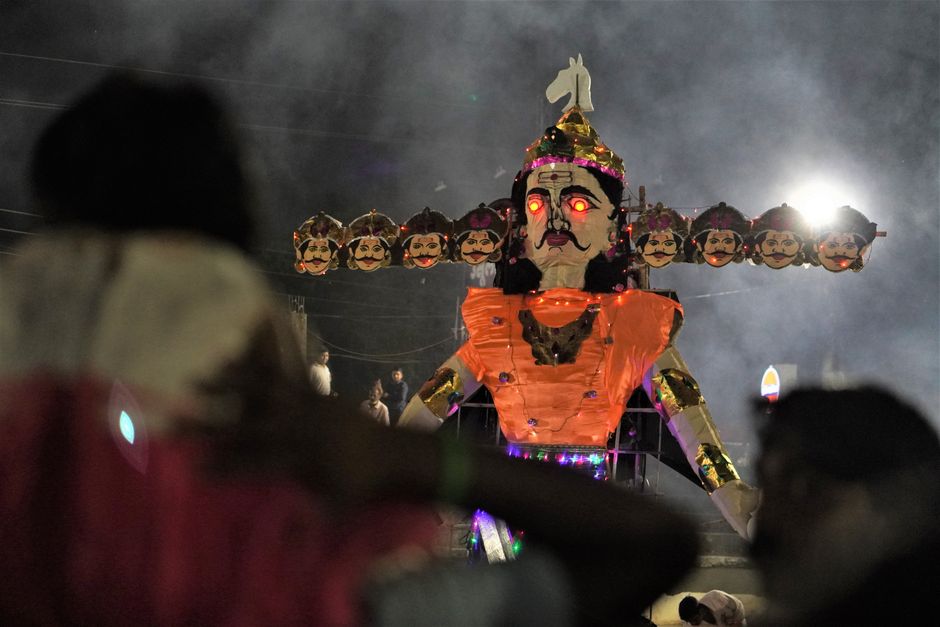
Dussehra, also known as Vijayadashami, was celebrated with grandeur across India on October 12, 2024. The festival, one of the most significant in the Hindu calendar, commemorates the triumph of good over evil — most notably Lord Rama's victory over the demon king Ravana, as recounted in the epic Ramayana.
The day began with early morning prayers and religious processions. In northern and western states, especially Rajasthan, Gujarat, Uttar Pradesh, and Madhya Pradesh, effigies of Ravana along with his brothers Kumbhakarna and Meghnad were set up in open grounds and later burned in the evening after elaborate rituals. Huge crowds gathered to witness the Ravan Dahan, which symbolises the destruction of ego, greed, and evil forces within humanity.
Throughout the day, several traditional pujas were performed at home and in temples. Shamipujan — the worship of the sham tree (Indian almond tree) — is considered highly auspicious on this day. People offer red flowers, turmeric, and kumkum to the tree, seeking blessings for prosperity and good health. This ritual is especially prominent in western and northern India.
Shastrapujan, the ritual worship of instruments, weapons, and tools of one's profession, is another key practice on Vijayadashami. Business owners, students, artists, and professionals worship their respective tools, believing that beginning new ventures on this day brings success and divine blessings. In many parts of the country, vehicles, computers, and machines are also blessed during this ceremony.
Aparajita Pujan is performed particularly in eastern India, especially in West Bengal and Odisha. Devotees worship Goddess Durga as Aparajita — the invincible form — seeking her protection and strength. In some regions, the nine-night Navratri celebrations culminate on this day with the worship of nine young girls representing the nine forms of the goddess.
Astrologers declared specific muhurtas for each ritual, advising devotees to perform the main pujas during the Dashami Tithi window, which spanned from the morning through late afternoon. The Ravan Dahan in many cities was scheduled for the evening sandhya (dusk) period, drawing lakhs of participants.


