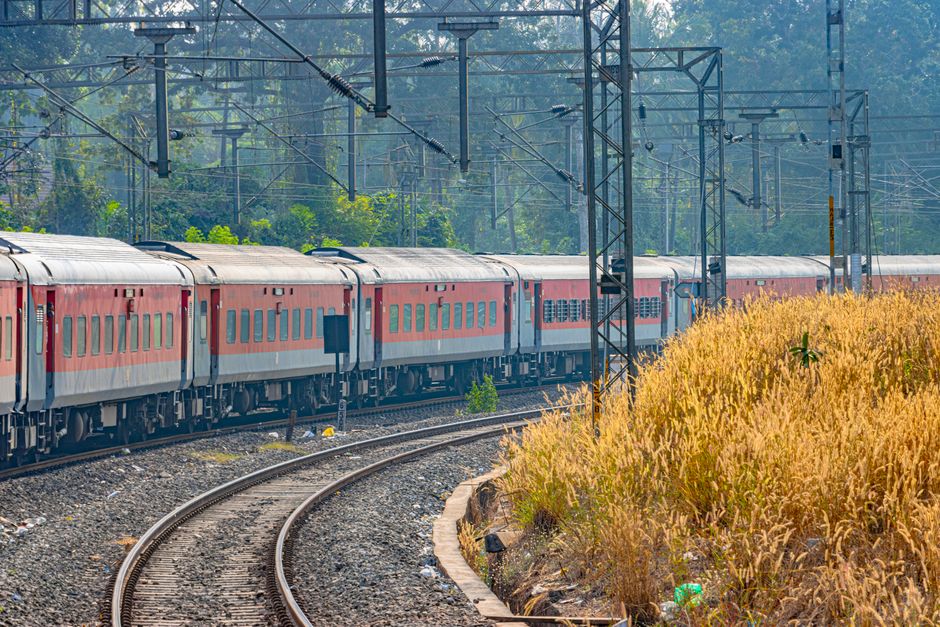
Indian Railways is preparing to modernise the critical Delhi-Mumbai rail corridor, with plans to enable high-speed operations of up to 160 kmph on select stretches of the route. The move forms a key part of Mission Raftaar, a flagship initiative aimed at transforming passenger rail travel across the country by significantly reducing journey times on major routes.
The Delhi-Mumbai corridor, one of the busiest rail routes in India, currently sees trains averaging between 100 and 110 kmph over long distances, with most express journeys taking between 16 and 18 hours. The proposed upgrades could bring that duration down to approximately 12 hours, making rail travel far more competitive against air connectivity on this corridor.
Under Mission Raftaar, Indian Railways has outlined a multi-pronged strategy that includes track modernisation, signalling upgrades, and infrastructure improvements. The programme targets raising running speeds on hundreds of route kilometres across the country through measures such as replacement of wooden sleepers with concrete ones, curvature rectification, deployment of modern signalling systems, and strengthening of bridges and embankments.
The Delhi-Mumbai route passes through several states including Haryana, Rajasthan, Gujarat, Maharashtra and the union territories of Delhi and Dadra and Nagar Haveli, making it a vital economic artery connecting the national capital with India's financial hub. Over 50 trains currently operate between the two cities daily, carrying millions of passengers each year.
Railway sources indicate that work on infrastructure upgrades along this corridor is already underway in phases. The focus is on identifying stretches where the track geometry and foundation can safely support 160 kmph operations without requiring exhaustive new alignments. Sections that currently have lower speed restrictions due to curves or other geometric constraints are being prioritised for realignment or widening work.
The Mission Raftaar initiative, launched a few years ago, has so far been applied to multiple corridors including Delhi-Kolkata, Delhi-Chennai, and Mumbai-Chennai routes, with varying degrees of implementation speed depending on local terrain and investment requirements.


