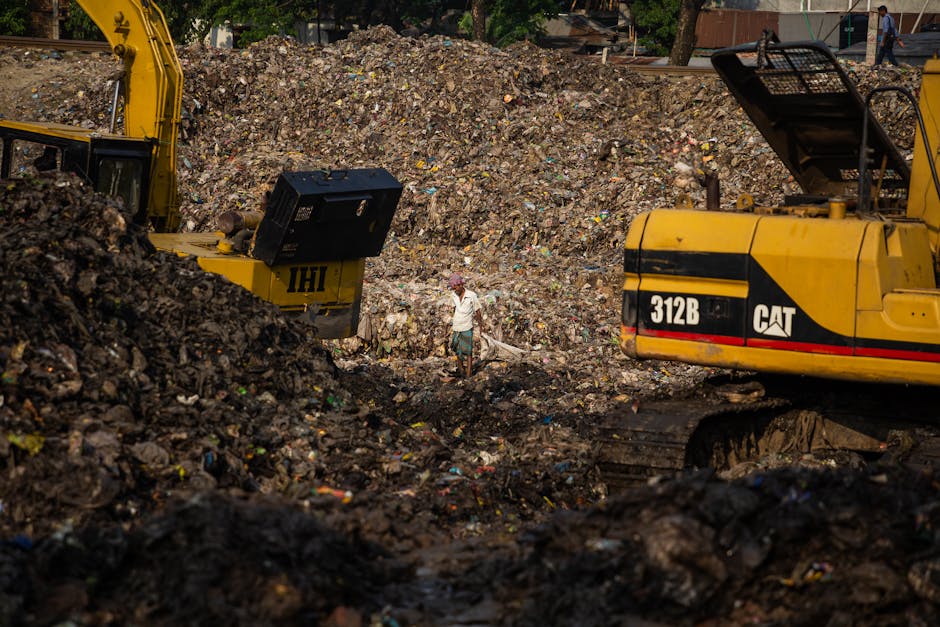
New Delhi — The Delhi government has embarked on a large-scale initiative to tackle the towering mountain of accumulated waste at the Bhalswa dumping ground, a project that officials say could take several years to complete. The operation marks one of the most aggressive attempts yet to deal with the capital's decades-old waste management crisis.
The Bhalswa site, located in north Delhi, has been serving as a landfill since the 1980s and at its peak stood nearly 60 metres tall, spreading across roughly 160 acres. Over the years, it became one of the largest dumping grounds in Asia, drawing waste from across the national capital and turning into a smoldering, disease-ridden eyesore visible from nearby residential areas.
According to municipal sources, the current operation involves removing layers of compacted garbage using heavy machinery, transporting the material to sanctioned processing facilities, and simultaneously undertaking land reclamation efforts. The government says it is deploying multiple earth-moving machines, excavators, and trucks on a round-the-clock basis to accelerate the process.
Environmental groups have long flagged Bhalswa as a public health emergency. The decomposing waste releases methane and other greenhouse gases, while leachate — toxic liquid formed as water seeps through garbage — has contaminated nearby groundwater. Residents in adjoining neighbourhoods have repeatedly complained of foul odours, respiratory illnesses, and rising cases of skin and eye infections.
The清理 effort comes at a time when Delhi's solid waste management system continues to face scrutiny. Despite various policies and waste-processing plants coming up across the city, a significant portion of collected garbage still ends up at dumping grounds like Bhalswa, Sewa Khurd, and Okhla. City authorities have acknowledged that source segregation and citizen cooperation remain weak links in the chain.
Officials estimate that clearing the Bhalswa mound alone will require the removal of millions of tonnes of waste. The project is being funded through a combination of state and central government allocations, with some funding also coming from green bonds and climate-related grants. Contractors have been given strict timelines, and penalties are being imposed for delays.
Community activists say that while the operation is welcome, the government must also focus on preventing future waste accumulation. They argue that without meaningful behavioural change and better recycling infrastructure, cleared land will simply fill up again within years.