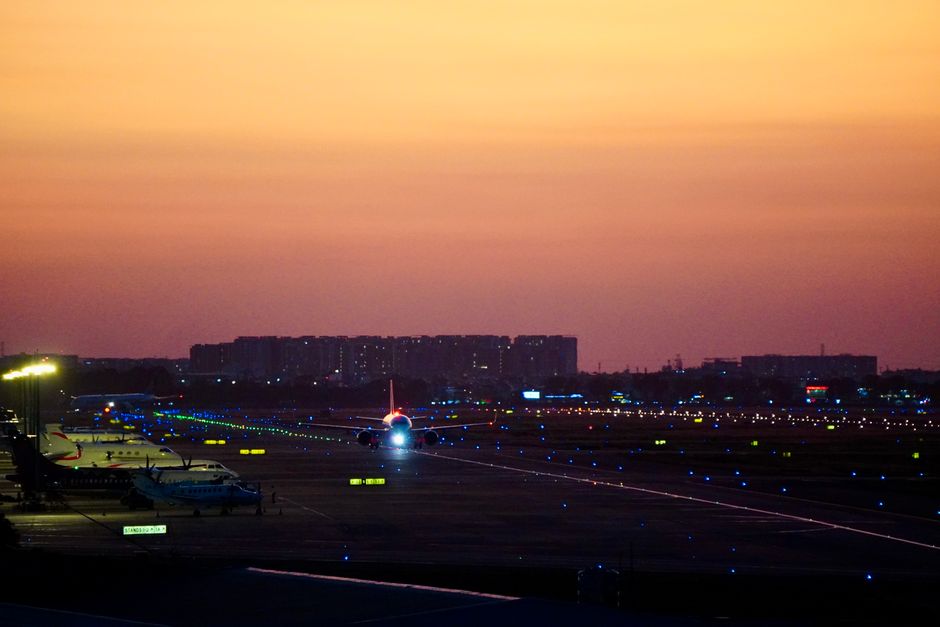
India’s air link with mainland China is expected to receive a significant boost in the coming days after a major Chinese airline signaled plans to resume direct flights between Delhi and Guangzhou. The announcement, made by the carrier’s operations team ahead of scheduled high-level diplomatic talks between Prime Minister Narendra Modi and President Xi Jinping, marks the first concrete sign of revived commercial air connectivity between the two Asian giants since services were dramatically scaled back during a period of strained bilateral relations.
Flights between Delhi and major Chinese cities such as Beijing, Shanghai, and Guangzhou were severely curtailed following the deadly border confrontation in Ladakh in June 2020. Chinese carriers, including China Eastern and Air China, suspended or drastically reduced their services to India in subsequent months, while India imposed restrictions on Chinese applications and reviewed foreign investment from nations sharing a land border. Direct air services to Guangzhou had not resumed at full capacity since the outbreak of the COVID-19 pandemic, with only sporadic charter or limited-frequency flights operating during the interim period.
Industry sources told the Reuters wire service that the Delhi–Guangzhou route would restart within weeks, with daily or near-daily flights likely once operations begin. The move is being closely watched by India’s Ministry of Civil Aviation and by travel industry bodies, which have long lobbied for the restoration of direct connections to facilitate both business travel and tourism. Passenger demand on the route has built steadily, but passengers continue to face long layovers via the Middle East or Southeast Asian hubs.
Aviation analysts note that the timing of the resumption — announced just before a possible revisit between Modi and Xi — reflects the broader diplomatic calculus Beijing has often employed: using connectivity and trade levers as bargaining chips during periods of strategic tension. The restoration of flights, however modest, is nevertheless seen as a confidence-building gesture from the Chinese side and a signal that both governments are seeking to stabilise relations after years of military standoffs and diplomatic friction along the Line of Actual Control.


