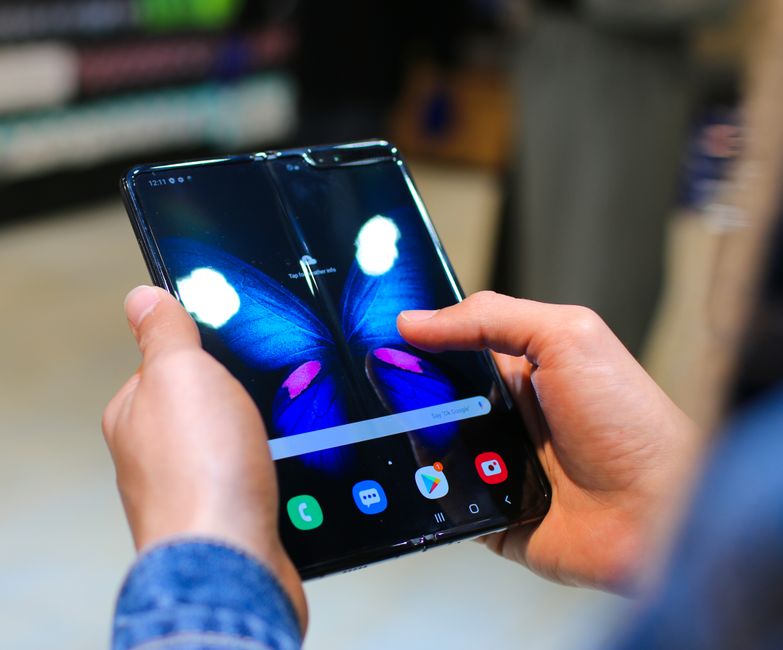
Apple has finally entered the foldable smartphone market with the launch of the iPhone Duo in India, a move that signals the tech giant's long-awaited response to growing consumer demand for flexible-screen devices. Priced aggressively at Rs 2,99,900, the iPhone Duo is being positioned as a premium device targeting early adopters and loyal Apple users who have been waiting for the company to diversify its product lineup beyond traditional slab-style smartphones.
The most striking feature of the iPhone Duo is its dual-display design. When unfolded, the device reveals a expansive 7.6-inch primary display, offering ample screen real estate for multitasking, media consumption, and productivity work. On the exterior, a compact 5.4-inch secondary screen allows users to check notifications, control music, or view camera previews without having to open the device fully. This clamshell-style foldable design is reminiscent of earlier Apple patents that hinted at a two-screen phone concept.
Under the hood, the iPhone Duo is powered by Apple's custom A20 Pro chip, which the company claims delivers significant performance gains over previous generations. The chip is built to handle the demands of a larger display, multitasking across both screens, and the more intensive graphics requirements that come with a foldable form factor.
One of the more notable departures from Apple's usual biometric approach is the decision to replace Face ID with Touch ID. Rumors suggest this change was made to accommodate the folding hinge mechanism, which may interfere with the TrueDepth camera system that powers facial recognition. Instead, the iPhone Duo features a fingerprint sensor, likely embedded in the side button or integrated into the display itself.
Powering the device are separate batteries on each half of the phone, working in tandem to deliver up to 24 hours of battery life on a single charge — a figure Apple considers competitive despite the additional display and processing demands. The company has also committed to software optimizations that will manage power distribution intelligently between the two screens.
In a move consistent with Apple's recent product strategies, the iPhone Duo is eSIM-only, meaning there is no physical SIM card tray. Users will need to rely entirely on digital eSIM profiles, which Apple says simplifies the internal design and improves water and dust resistance. For Indian consumers, this means activating an eSIM through their carrier before using the device.
Pre-orders for the iPhone Duo in India will open on October 16, with general sales beginning on October 23. Apple has not yet disclosed whether the iPhone Duo will be available in other markets internationally, but industry analysts expect a wider rollout in the coming months.
The launch represents a significant moment for Apple, which has faced increasing competition in the foldable segment from Samsung, Huawei, and Chinese brands like Oppo and Xiaomi. Analysts note that Apple's late entry could actually work in its favor if the iPhone Duo delivers a polished, reliable experience that addresses the durability and software adaptation concerns many consumers have with early-generation foldables.


