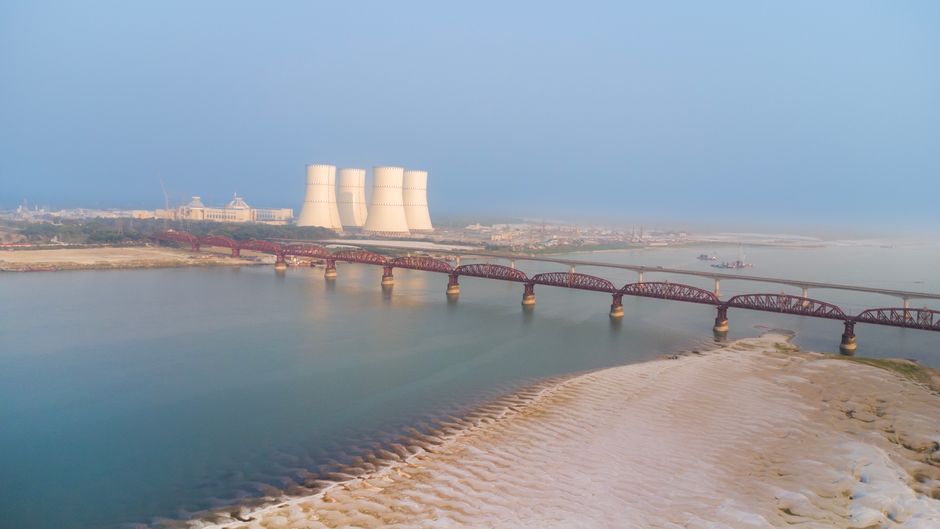
Assam Chief Minister Himanta Biswa Sarma has laid the foundation stone for Adani Power's 3,200 MW ultra-supercritical thermal power plant in the Chapar area of Dhubri district, one of the most significant industrial investments ever announced in the state. The project, backed by an estimated outlay of around Rs 48,000 crore, is set to transform Assam's power infrastructure and create substantial employment opportunities across the northeastern region.
The proposed power facility will comprise four units, each generating 800 MW, using ultra-supercritical technology — one of the most efficient thermal power generation methods available today. This technology, which operates at higher temperatures and pressures than conventional subcritical plants, delivers better fuel efficiency and lower emissions per unit of electricity produced. Industry experts note that switching to ultra-supercritical units signals Adani Power's intent to establish a modern, relatively cleaner thermal plant in a region that has historically depended on coal-based power stations with older technology.
According to government estimates, the construction and operational phases of the project could generate up to 20,000 jobs — a staggering figure for a state where employment opportunities, particularly in heavy industry and engineering, remain limited. A significant portion of these roles would be created during the multi-year construction phase, with permanent positions following once the plant becomes fully operational.
Dhubri district, located in western Assam along the banks of the Brahmaputra River, has long been identified as a strategic location for large-scale industrial development due to its proximity to major coal transport routes from the Bokaro and Jharia coalfields in neighbouring Jharkhand, as well as access to water resources critical for thermal power cooling systems. The Assam government has actively courted industrial investors under its recent policy push to diversify the state's economy beyond oil and gas.
Power shortage and reliability have been persistent challenges in Assam and the broader northeastern grid, which often faces deficit conditions, especially during peak demand periods. The addition of 3,200 MW of dedicated thermal capacity is expected to not only meet local demand but also contribute to the regional grid's stability. Analysts suggest the project could reduce Assam's dependence on power imports from neighbouring states and lower the frequency and duration of load shedding in the state.
While the foundation stone ceremony has been widely celebrated, some environmental groups and local residents have raised questions about the ecological impact of a large thermal plant in a ecologically sensitive part of the Brahmaputra basin, including concerns over water usage, ash disposal, and air quality. These issues are likely to gain prominence as the project moves into its implementation phase.